
KEY TAKEAWAY
Occupancy and ADR are comparable only with consistent numerators and denominators. Separate reservations, room nights, live bookings and finalized revenue, including the treatment of channel fees.
1. Reservations are not room nights
One reservation can cover multiple rooms and nights. Separate reservation ID, stay date, rooms and nights and handle partial cancellations and room changes.
Booking-date reporting describes sales activity; stay-date reporting describes operations. Label the basis clearly for cross-team discussions.
2. Define available inventory
Rooms closed for refurbishment or faults change occupancy depending on the denominator. Agree on a definition and retain closures and operating days as source data.
Before comparing properties, align periods and inventory rules. Explain differences instead of presenting an unexplained ranking.
3. Separate room revenue from package value
Packages can include meals, activities or transfers. Agree with finance and operations on room allocation, tax basis, discounts and cancellation fees. Keep the method consistent over time.
ADR divides room revenue by sold room nights; an unclear revenue allocation can make a package change look like operating improvement.
4. Explain channel contribution
Channels have different commissions and cancellation terms. Separate available fees and payment costs instead of equating gross sales with contribution. Direct bookings also have marketing and operating costs.
Distinguish measured costs from allocations and explain how different allocation methods affect comparisons.
5. Establish useful refresh before forecasting
Refresh requirements differ between immediate sales decisions and morning preparation. Map who needs which information and when.
Show stale-data status and support ownership when refresh fails. Where aggregate arrivals and departures suffice, avoid exposing unnecessary guest information.
6. Start with one management report
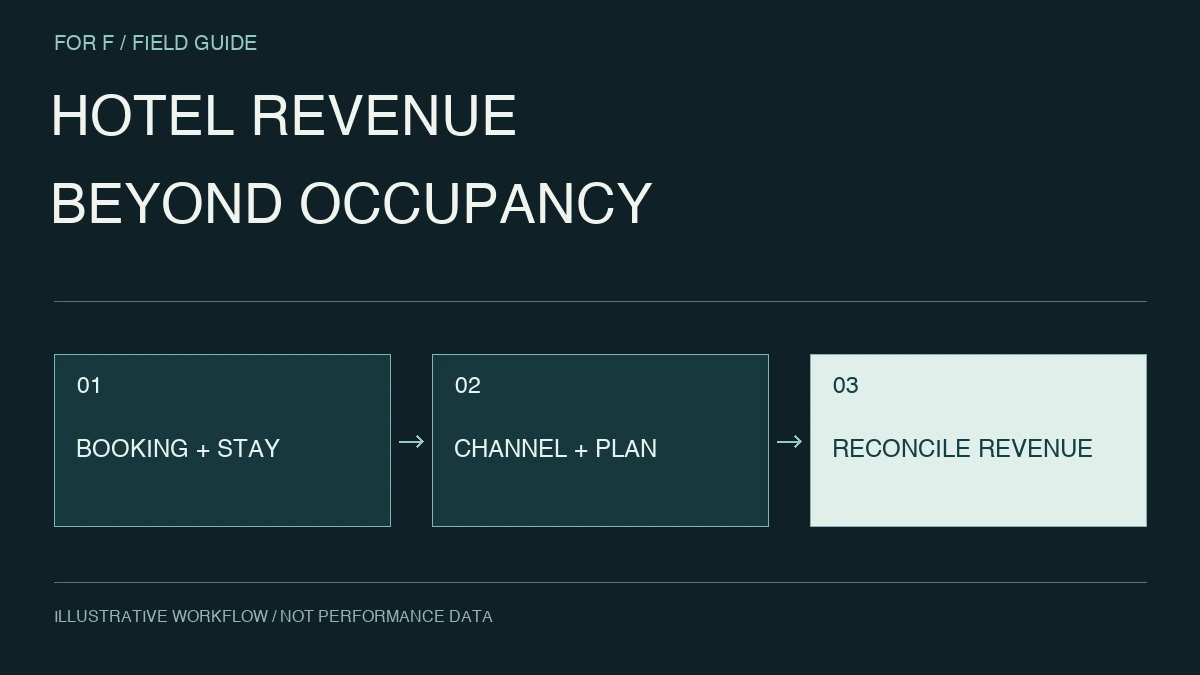
Choose an existing management report and reconcile it with PMS records through cancellations, changes and closures. Expand to property comparisons and demand analysis after explaining the differences.
For f can begin with existing exports, metric definitions and reporting. Samples and current management reports help define deliverables.
A concrete acceptance check
Reconcile front-desk reservations and finance records by stay date. Check that forward bookings and completed-stay actuals remain distinct before comparing commercial actions.
Before commissioning
- Separate reservations from room nights.
- Align available-inventory definitions.
- Distinguish package price from room revenue.
- Label live, final and estimated figures.
Explore support for this industry
Hospitality and tourism — data and AI overview ↗