Connect property information to everyday management.
Connect property registers, agreements, enquiries and repairs so teams can verify the facts they need. Build operational reporting and source-backed document assistance.
Conceptual data-to-operation flow, adapted to the agreed project scope.
Start with the operating model. Find the right problem.
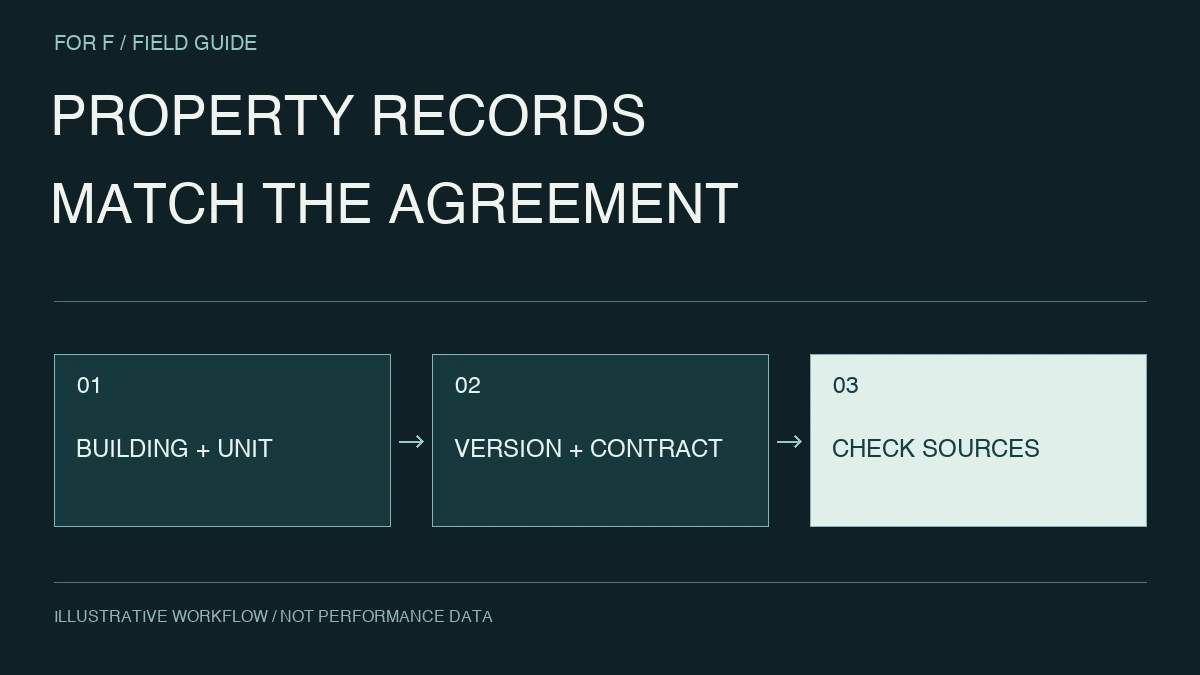
An address does not uniquely describe a building, unit, agreement and management period. Identify people, properties and contracts separately, preserving current state and history.
For these teamsProperty operations, brokerage operations, owner relations, planning and IT
01 / INPUTS
Property, unit and contract registers
Enquiries and repair histories
Agreements and management documents
02 / CONTEXT
Identify buildings and units
Align scope and time, preserving the path to source records.
An illustrative path from data to decisions. Interfaces, access and evaluation depend on the agreed scope.
PRIORITY WORKFLOWS
Choose the work to improve first.
01 / CAPABILITY
Property and sales operations data
Vacancy counts can differ because pending applications, repairs and ended management agreements are treated differently. Fix the reporting date and portfolio before calculating.
Connect properties, units, contracts and cases for vacancy, renewal and repair reviews. Reconcile differences in definitions and managed portfolios.
Using another property’s conditions or superseded rules can cause incorrect guidance. Restrict retrieval by property, contract and access; abstain when evidence is absent.
Help teams find relevant passages in rules, equipment records and contract material. Scope by property and version, with source, effective date and staff review.
Start with existing information. Design the connections.
Before adding systems, identify sources, access methods and refresh owners. CSV and existing reports can establish value before committing to integrations.
01Property, unit and contract registers
Separate building, unit and agreement identifiers, including vacancy and tenant-change periods.
02Enquiries and repair histories
Check agreement terms, revisions, termination dates and access permissions; similarly named properties must remain distinct.
03Agreements and management documents
Track receipt, assignment and completion of enquiries and repairs, separating personal data from aggregate views.
Synchronize operating systems and document stores, reflect management and staff changes in access, and align retention and audit records with existing controls.
Turn unresolved property work into an actionable queue.
This is an illustrative engagement, not a client case study or a claim of results.
Consider enquiries split between email and spreadsheets. Start where buildings and units can be identified, and establish which staff may reference agreement data.
Prototype status, next actions and ownership by property with links to originals. Enquiries lacking unit identifiers remain pending instead of being assigned automatically to another property.
What this prototype delivers
Verify neighbouring units and contract transitions. Confirm that out-of-scope agreements and personal data remain hidden and unresolved enquiries are not dropped.
Useful inputs for an initial discussion
Anonymized property registers and service histories
Building, unit and agreement IDs with staff access scope
Definitions of open, assigned and completed work and handover steps
The set does not need to be complete; discovery can establish missing inputs and access conditions.
DISCOVER → PROVE → BUILD
Can staff find evidence faster without mixing information across properties?
Choose a property group, document type and user team.
01
Similar properties
Test similar names and identical unit numbers in different buildings.
02
Lifecycle changes
Check renewals, ended management and document replacement.
03
Access differences
Verify that unauthorized property and personal information cannot be retrieved or linked.

 REAL ESTATE / OVERVIEW