Connect facilities and fleets. Make plans actionable.
Connect orders, warehouses, deliveries and arrival events to understand waiting and workload. Design analytics for dispatch decisions and practical ways to capture field events.
Conceptual data-to-operation flow, adapted to the agreed project scope.
Start with the operating model. Find the right problem.
Overall averages hide operational bottlenecks. Examine sites, weekdays, customers and time windows to identify who can change the waiting time and which planning decisions it informs.
For these teamsLogistics planning, dispatch, warehouse managers and shipper logistics teams
01 / INPUTS
TMS and dispatch sheets
WMS and shipment records
Arrival, gate and handling events
02 / CONTEXT
Match visits and events
Align scope and time, preserving the path to source records.
An illustrative path from data to decisions. Interfaces, access and evaluation depend on the agreed scope.
PRIORITY WORKFLOWS
Choose the work to improve first.
01 / CAPABILITY
Waiting-time and logistics analytics
Treating all time between arrival and departure as waiting can misdirect improvement. Distinguish early arrivals, queues, handling and inspection, with a capture method the site can sustain.
Use arrival, reception, handling and departure events to explain dwell time. Compare sites and customers using consistent event definitions and missing-data rules.
A short route may violate unloading order or delivery restrictions. Separate hard constraints from preferences and explain which assumptions need adjustment when no feasible plan exists.
Model delivery windows, vehicle capabilities and site constraints so dispatchers can compare feasible options and understand changes.
Start with existing information. Design the connections.
Before adding systems, identify sources, access methods and refresh owners. CSV and existing reports can establish value before committing to integrations.
01TMS and dispatch sheets
Check trips, destinations, delivery windows and vehicle constraints, including orders split across trips.
02WMS and shipment records
Define arrival, check-in, loading and departure events; missing scans must not look like short visits.
03Arrival, gate and handling events
Keep schedule revisions, load constraints and reasons for manual changes to compare plans with feasible operations.
Confirm TMS and WMS interfaces and refresh timing. Handle late data, duplicate orders and reception during network outages.
Trace long waiting times back to operating conditions.
This is an illustrative engagement, not a client case study or a claim of results.
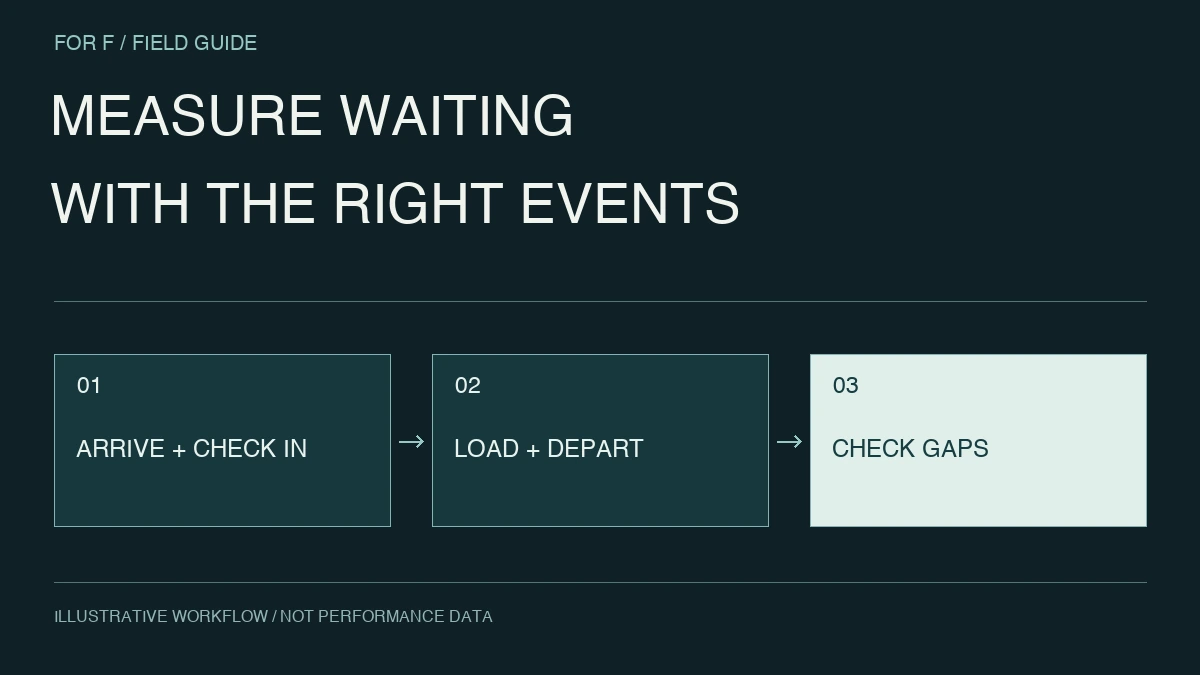
Even at one site, booking and check-in practices change what waiting time means. Scope one location, define events from arrival to departure and map where digital and paper records diverge.
Show a trip timeline and missing events, with filters for day, time and load type. Keep trips requiring source verification explicit rather than filling gaps with estimated times.
What this prototype delivers
Check identical trips with gate staff and dispatch managers. Acceptance requires agreement on periods and event definitions; sites needing better recording can be separated from implementation scope.
Useful inputs for an initial discussion
Anonymized trip-level arrival, check-in, loading and departure events
Dispatch sheets, site codes, booking slots and vehicle constraints
Procedures and owners for resolving missing events
The set does not need to be complete; discovery can establish missing inputs and access conditions.
DISCOVER → PROVE → BUILD
Can the team reduce reconciliation under comparable orders and site conditions?
Validate one site and a defined period of dispatch or waiting records.
01
Include peak days
Evaluate concentrated workloads and frequent booking changes.
02
Reproduce exceptions
Include re-entry, repeated deliveries, same-day additions and missing fields.
03
Reconcile with the site
Compare individual visits with source records and explain differences.

 LOGISTICS / OVERVIEW