 LOGISTICS / BUILD & OPERATE
Cutoffs and corrections
Distinguish finalized trips from later adjustments and fix the reporting window.
 TECHNOLOGY & DESIGN
LOGISTICS / BUILD & OPERATE
Confirm TMS and WMS interfaces and refresh timing. Handle late data, duplicate orders and reception during network outages.
Explore the delivery scope ↓Conceptual data-to-operation flow, adapted to the agreed project scope.
Confirm TMS and WMS interfaces and refresh timing. Handle late data, duplicate orders and reception during network outages.
Distinguish finalized trips from later adjustments and fix the reporting window.
Show data freshness and provide a fallback to established dispatch sheets.
Validate event definitions before expanding to different gate and handling processes.
PRODUCTION SCOPE
| Scope | Industry context | Agreement |
|---|---|---|
| Data integration | TMS and dispatch sheets / WMS and shipment records / Arrival, gate and handling events | Refresh, retry, deduplication and reconciliation |
| Interfaces and access | Logistics planning, dispatch, warehouse managers and shipper logistics teams | Read, edit and approve permissions with activity records |
| Migration and acceptance | Validate one site and a defined period of dispatch or waiting records. | Parallel verification, scoped record counts and rollback |
ARCHITECTURE CHOICES
Compare extending existing databases and business tools with cloud foundations including Snowflake and Google Cloud. Evaluate volume, refresh, access, interfaces and operating cost before choosing products.
Ingest and reconcile operating records before deciding whether write-back is needed.
Show failed refreshes, unmatched data and pending reviews with source and recovery paths.
Separate compute, storage and API cost drivers and agree on refresh and usage scope.
RELEASE READINESS
Can the team reduce reconciliation under comparable orders and site conditions?
Test missing or late data, integration failures and unavailable owners, including notifications, recovery and manual fallback.
Agree on architecture, configuration, access, refresh and recovery documentation, with defined monitoring hours and improvement scope.
Interfaces, export terms, volumes, history, users, permissions and timing make estimates concrete. If these are unknown, scope discovery as an initial engagement.
Overall averages hide operational bottlenecks. Examine sites, weekdays, customers and time windows to identify who can change the waiting time and which planning decisions it informs.
QUESTIONS BEFORE YOU START
No. Begin with read-only analysis; design write-back separately after confirming interfaces and responsibilities.
Measure current completeness and review effort, then agree on comparable metrics rather than adopting national averages as targets.
RELATED FIELD GUIDE
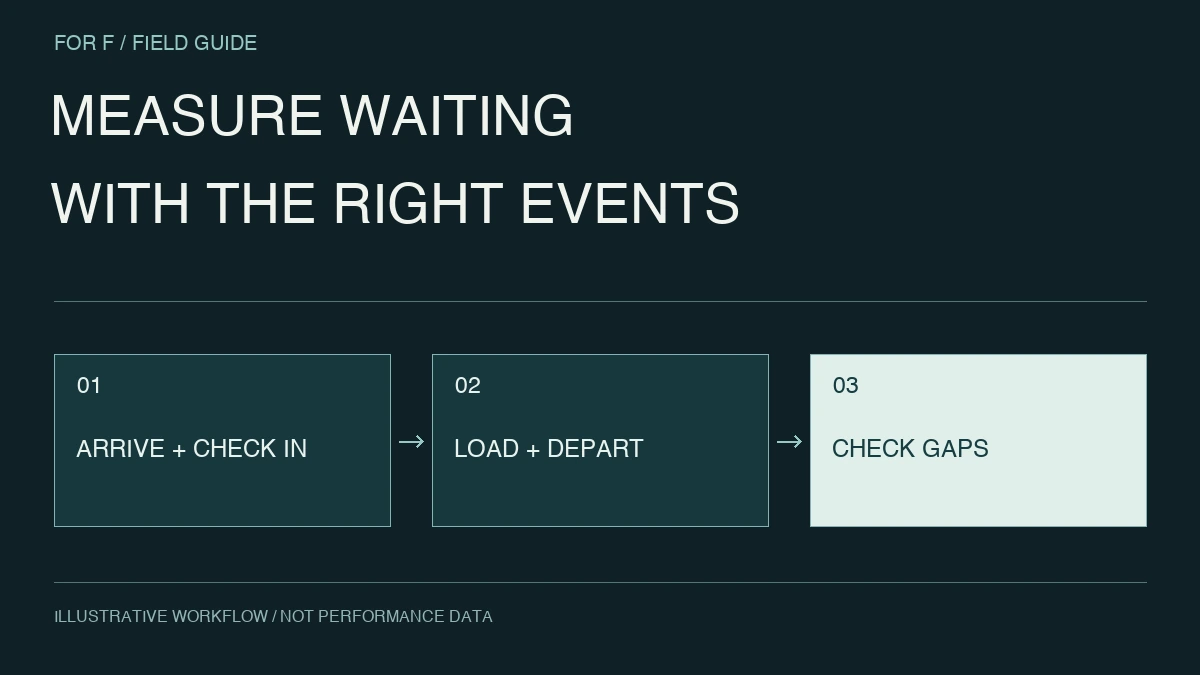
LOGISTICS / GUIDE
Before using a single arrival-to-departure duration, agree on reception, waiting and handling events. Build evidence that shippers and operating teams can use together.
Read the guide ↗YOUR OPERATION / OUR STARTING POINT
Tell us about the workflow, systems and reporting or documents that need attention. We will define a suitable phase, deliverables and assumptions.
Logistics and transport — discuss your project How scope and estimates work ↗