 LOGISTICS / CAPABILITY
Capture constraints
Document vehicle, capacity, time and compatibility conditions with dispatchers.
 TECHNOLOGY & DESIGN
LOGISTICS / CAPABILITY
Model delivery windows, vehicle capabilities and site constraints so dispatchers can compare feasible options and understand changes.
Explore the delivery scope ↓Conceptual data-to-operation flow, adapted to the agreed project scope.
A short route may violate unloading order or delivery restrictions. Separate hard constraints from preferences and explain which assumptions need adjustment when no feasible plan exists.
THE SHORT ANSWER
Model delivery windows, vehicle capabilities and site constraints so dispatchers can compare feasible options and understand changes.
DESIGN & DELIVERY
Document vehicle, capacity, time and compatibility conditions with dispatchers.
Use the same orders to compare delay, replanning effort and explainability as well as distance.
Test additions, breakdowns and stockouts. Let dispatchers freeze committed trips and choose what to replan.
DATA READINESS
A consistent format does not ensure operational usefulness. Confirm meaning, refresh and exceptions with owners, and keep missing information explicit.
| Data | Required fields | Checks |
|---|---|---|
| Destinations | Address, time window and unloading rules | Map coordinates versus actual access |
| Vehicles and loads | Volume, weight and vehicle class | Units and compatibility |
| Actuals | Plans, trips and change reasons | Separate waiting from driving |
EVALUATION
These are candidate evaluation measures. Establish a baseline and agree on data, period, targets and exclusions before work starts. They are not claimed performance results.
| Measure | Evaluation method |
|---|---|
| Feasibility | Share of proposed plans meeting agreed hard constraints |
| Replanning effort | Time needed to turn a proposal into a usable plan |
| Plan versus actual | Compare delay, driving and waiting separately |
Dispatchers approve the plan. Safety and individual working conditions are not finalized solely on an AI recommendation.
Review data mappings, workflow, prototype and evaluation evidence before choosing production scope. Estimates distinguish assumptions because permissions and interface terms affect implementation.
Validate one site and a defined period of dispatch or waiting records.
QUESTIONS BEFORE YOU START
No. Begin with read-only analysis; design write-back separately after confirming interfaces and responsibilities.
Measure current completeness and review effort, then agree on comparable metrics rather than adopting national averages as targets.
RELATED FIELD GUIDE
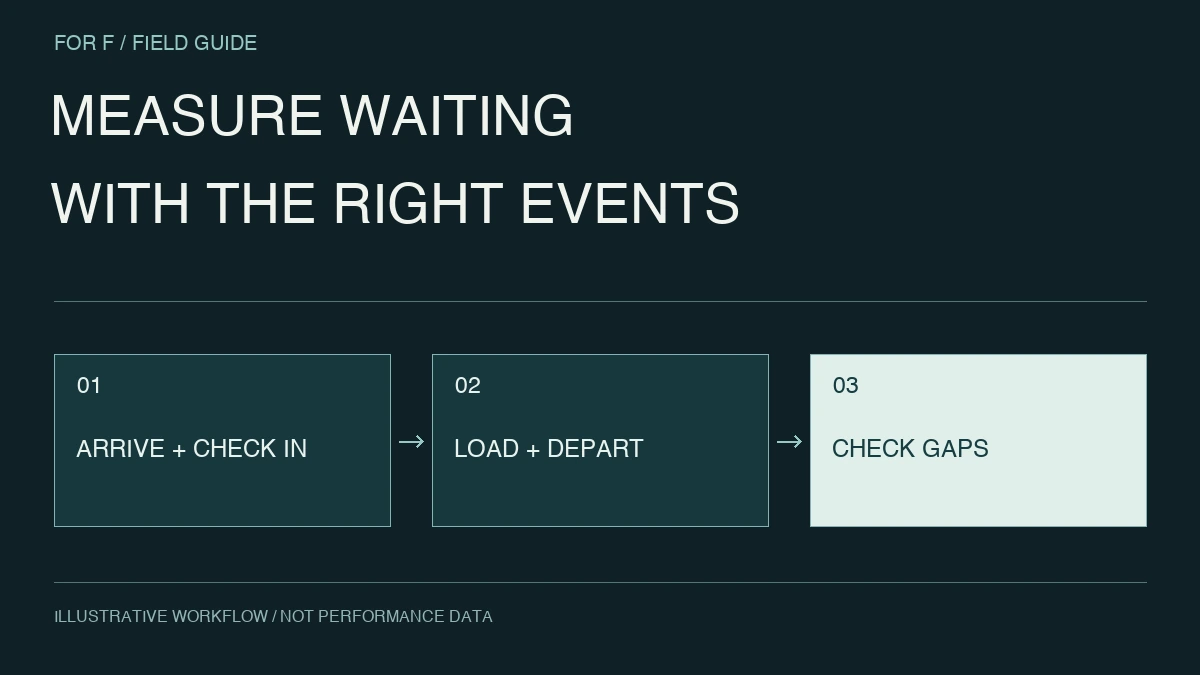
LOGISTICS / GUIDE
Before using a single arrival-to-departure duration, agree on reception, waiting and handling events. Build evidence that shippers and operating teams can use together.
Read the guide ↗YOUR OPERATION / OUR STARTING POINT
Tell us about the workflow, systems and reporting or documents that need attention. We will define a suitable phase, deliverables and assumptions.
Logistics and transport — discuss your project How scope and estimates work ↗