 LOGISTICS / CAPABILITY
Define events
Record booking, actual arrival, reception, handling and departure separately with clear ownership.
 TECHNOLOGY & DESIGN
LOGISTICS / CAPABILITY
Use arrival, reception, handling and departure events to explain dwell time. Compare sites and customers using consistent event definitions and missing-data rules.
Explore the delivery scope ↓Conceptual data-to-operation flow, adapted to the agreed project scope.
Treating all time between arrival and departure as waiting can misdirect improvement. Distinguish early arrivals, queues, handling and inspection, with a capture method the site can sustain.
THE SHORT ANSWER
Use arrival, reception, handling and departure events to explain dwell time. Compare sites and customers using consistent event definitions and missing-data rules.
DESIGN & DELIVERY
Record booking, actual arrival, reception, handling and departure separately with clear ownership.
Use date, trip, location and booking identifiers rather than vehicle registration alone.
Review long stays and congestion windows alongside averages to inform slots, staffing and load preparation.
DATA READINESS
A consistent format does not ensure operational usefulness. Confirm meaning, refresh and exceptions with owners, and keep missing information explicit.
| Data | Required fields | Checks |
|---|---|---|
| Gate events | Trip, vehicle, site and time | Re-entry and overnight visits |
| Handling | Start, end and operation type | Do not convert unknown values into zero |
| Bookings and shipments | Planned time, shipper and volume | History of revisions |
EVALUATION
These are candidate evaluation measures. Establish a baseline and agree on data, period, targets and exclusions before work starts. They are not claimed performance results.
| Measure | Evaluation method |
|---|---|
| Event completeness | Visits with all required events divided by in-scope visits |
| Reconciliation effort | Dispatch and site time spent matching records |
| Dwell distribution | Median and long-tail stays for comparable trips |
Regulatory reporting requires separate confirmation of applicability and current official guidance. This scope designs measurement and integration for operational improvement.
Review data mappings, workflow, prototype and evaluation evidence before choosing production scope. Estimates distinguish assumptions because permissions and interface terms affect implementation.
Validate one site and a defined period of dispatch or waiting records.
QUESTIONS BEFORE YOU START
No. Begin with read-only analysis; design write-back separately after confirming interfaces and responsibilities.
Measure current completeness and review effort, then agree on comparable metrics rather than adopting national averages as targets.
RELATED FIELD GUIDE
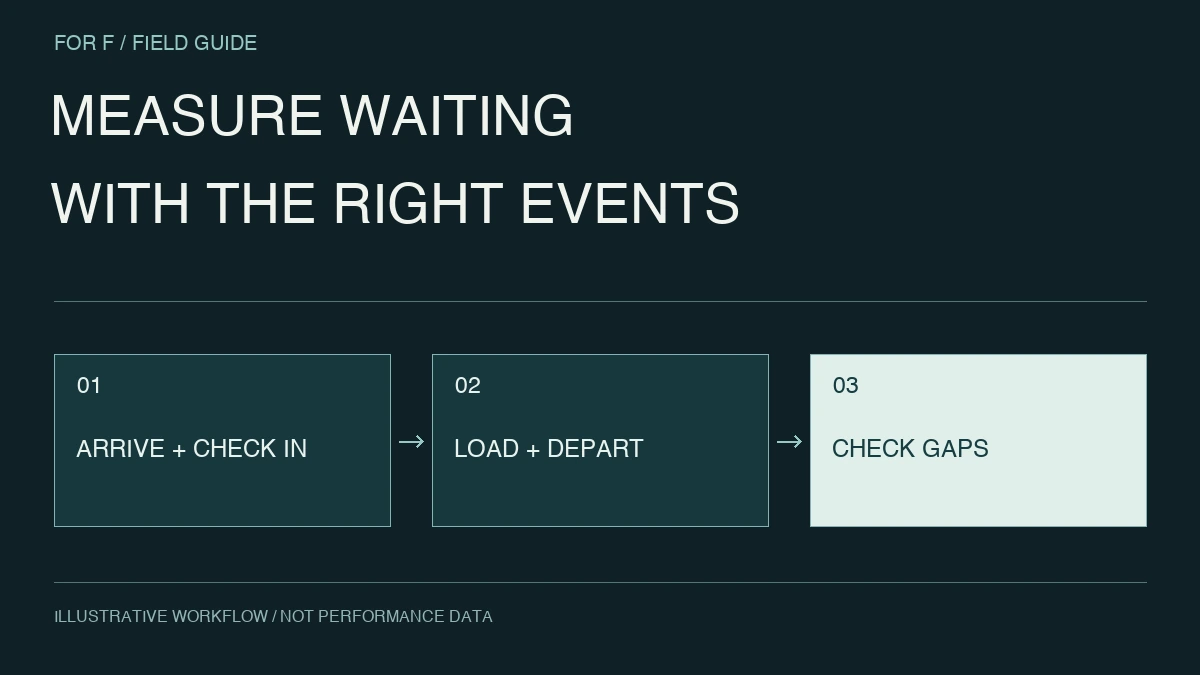
LOGISTICS / GUIDE
Before using a single arrival-to-departure duration, agree on reception, waiting and handling events. Build evidence that shippers and operating teams can use together.
Read the guide ↗YOUR OPERATION / OUR STARTING POINT
Tell us about the workflow, systems and reporting or documents that need attention. We will define a suitable phase, deliverables and assumptions.
Logistics and transport — discuss your project How scope and estimates work ↗